Chapter I: Introduction

A few years ago I attended an event where the guest speaker was a cabinet member. In conversation afterwards, the subject of long term petroleum supplies came up. He warned that at some point, perhaps a century or so in the future, someone would put his key in his car’s ignition, turn it, and nothing would happen – because there would be no more gasoline.

What shocked me was not his ignorance of the economics of depletable resources–if we ever run out of gasoline it will be a long slow process of steadily rising prices, not a sudden surprise–but the astonishing conservatism of his view of the future. It was as if a similar official, a hundred years earlier, had warned that by sometime around the year 2000 the streets would be so clogged with horse manure as to have become impassible. I do not know what the world will be like a century hence. But it is not likely to be a place where the process of getting from here to there begins by putting a key in an ignition, turning it, and starting an internal combustion engine burning gasoline.

This book is about technological change, its consequences and how to deal with them. This chapter briefly surveys the technologies. The next discusses how to adjust our lives and institutions to their consequences.

I am not a prophet; any one of the technologies I discuss may turn out to be a wet firecracker. It only takes one that does not to remake the world. Looking at some candidates will make us a little better prepared if one of those revolutions happens. Perhaps more important, after we have thought about how to adapt to any of ten possible revolutions, we will at least have a head start when the eleventh drops on us out of the blue.

Posted in Science | Tagged | Leave a comment

YouTube – Francoise Hardy – &Message Personnel&

Posted in Music | Tagged , | Leave a comment

YouTube – Françoise Hardy – Si Cest ça

Posted in Music | Tagged | Leave a comment

Crysis Review

    Things my youngest brother does in his spare time: Attempting to melt one of my servers by getting his game review on the digg frontpage.

ouch.

Transfers for the 30th and 31st of Dec were 32G and 35G respectively.

Posted in Computing | Tagged | Leave a comment

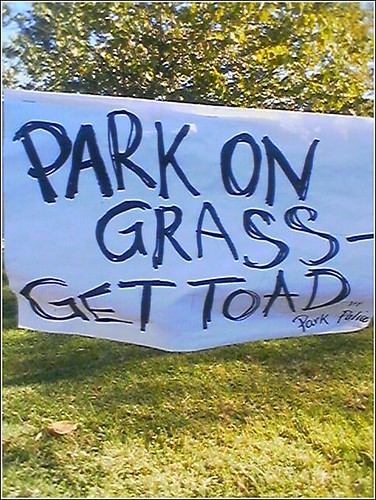
toad on Flickr – Photo Sharing!

Free Toads!
–I guess they ran out of bacon.

more

Posted in Arts, Humour, Photography | Tagged | Leave a comment

AccuWeather.com: Global Warming News, Science, Myths, Articles

Solar Cycle 24 begins, with the first auroras already being reported on spaceweather.com; although the maximum won’t be till 2011 or so. The early start (predictions suggested it would be in March + or – 6 months) means it could be a powerful one.

click analytics

Posted in Science | Tagged | Leave a comment

YouTube – The Birth of modern Psychiatry: Part 1 of 4

Thud. Don’t hear it.

part 2
part 3
part 4

Posted in Misc | Tagged , | Leave a comment

The Infamous Brad – Old gods when?

The city burners: an unknown group who managed to overthrow almost 9000 years of Bronze Age civilisation. In 28 years.

Let me start with a quick overview of the oldest of ancient history, the history that preceded the time of the Greek gods. Starting around 10,000 BCE, human beings almost everywhere abandoned the lifestyle of the new stone age (Neolithic) and what we call the bronze age began. Bronze metallurgy was only the least of the changes, though. The really big changes were economic and political. Hunter gatherer societies developed and then based their lives around annual cereal crops. When these crops were harvested, nearly 100% was paid out in taxes and offerings to two sometimes competing but generally cooperating sets of granaries: the palace of the king, and the temples. The temples doled out the grain as offerings, and as wages to pay to build religious buildings and produce religious spectacles. The king doled out the grain as needed, and as wages for public works like roads and monuments and yes, more granaries. But the king also used a lot of that grain to pay for and provision a small, elite, professionalized and expensively equipped force of chariot archers. This chariot army was used to annex other tribes or kingdoms that had embraced agriculture more slowly, to defend the kingdom from annexation by other empires, and to put down the occasional revolt.

This was the most stable way of life that human beings have ever known. The capital city of the empire would occasionally change, the names of the gods sometimes changing with it, but the actual way of life didn’t change for thousands of years. Then, in the space of about 27 years, everything turned upside down. Out of all of the major bronze age cities we know of, all but two were attacked and burned viciously to the ground by unknown invaders or rebels. The first city burned around 1225 BCE. The last sighting of the city burners was when they were defeated at great cost by Ramses II in the Second Battle of the Sea Peoples in 1198 BCE.

Continued…

Posted in Misc | Tagged | Leave a comment

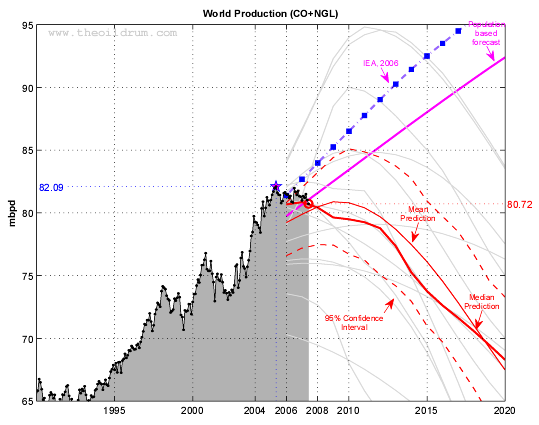
Peak Oil and Climate Change Q & A | Inspiring Green Leadership

Richard Heinberg captures it perfectly when he says: “Climate change makes getting off of oil necessary and peak oil makes it inevitable.” In other words, peak oil a very good reason to create alternative, renewable energy sources right now.

the forecast in the streets…

Posted in Science | Tagged , | Leave a comment

Know your Unix System Administrators!

alias renice ‘echo Renice\? You must mean kill -9.; kill -9 \!*’

*giggle*

Posted in Computing | Tagged | Leave a comment