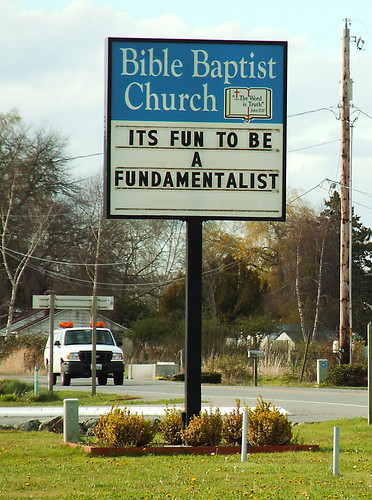
Stumbleupon Review of : http://www.phnompenhpost.com/index.php/2009091628419/National-news/monk-accused-of-biting-spree.html
- IF MONKS ARE FOUND TO DRINK WINE OR BITE PEOPLE, THEY MUST BE DEFROCKED.
Is it possible to reverse this process? Can something that has mutated go back to being what it used to be? What we need today, for the sake of the survival of this planet, is long-term vision. Can governments whose very survival depends on immediate, extractive, short-term gain provide this? Could it be that democracy, the sacred answer to our short-term hopes and prayers, the protector of our individual freedoms and nurturer of our avaricious dreams, will turn out to be the endgame for the human race? Could it be that democracy is such a hit with modern humans precisely because it mirrors our greatest folly–our nearsightedness?
trendy.
Luvly Jubbly.
A project management system you don't have to spend more time on than the actual projects you are tracking.
It has a pretty much flat initial learning curve (see the short intro screencast) but seems to have more under the hood when needed: including Fibonacci sequence based difficulty profiling, which, when you come down to it, is pretty much essential in this day and age.
Be nice if it had nesting like todoist.com, but the tagging makes up for that.
ed (22 Sept '09): Actually, it does have a form of nesting, you can turn on tasks in the settings to further split up the primary stories.
We can startup and even scale companies with little or no money, making the banks and investment capital on which business once depended obsolete. That's the real reason for the so-called economic crisis: there is less of a market for the debt on which the top-heavy game is based. We can develop local and complementary currencies, barter networks, and other exchange systems independently of a central bank, and carry out secure transactions with our cell phones.
In doing so, we become capable of imagining a marketplace based in something other than scarcity — a requirement if we're ever going to find a way to employ an abundant energy supply. It's not that we don't have the technological means to source renewable energy; it's that we don't have a market concept capable of contending with abundance. As Buckminster Fuller would remind us: these are not problems of nature, they are problems of design.
If science can take on God, it should not fear the market. Both are, after all, creations of man.
We must stop perpetuating the fiction that existence itself is dictated by the immutable laws of economics. These so-called laws are, in actuality, the economic mechanisms of 13th Century monarchs. Some of us analyzing digital culture and its impact on business must reveal economics as the artificial construction it really is. Although it may be subjected to the scientific method and mathematical scrutiny, it is not a natural science; it is game theory, with a set of underlying assumptions that have little to do with anything resembling genetics, neurology, evolution, or natural systems.
The scientific tradition exposed the unpopular astronomical fact that the earth was not at the center of the universe. This stance challenged the social order, and its proponents were met with less than a welcoming reception. Today, science has a similar opportunity: to expose the fallacies underlying our economic model instead of producing short-term strategies for mitigating the effects of inventions and discoveries that threaten this inherited market hallucination.
The economic model has broken, for good. It's time to stop pretending it describes our world.
The fact is MySpace is still quite popular among a certain segment of the population. Only a month ago, I was doing fieldwork in Atlanta, where I found heavy usage of MySpace among certain groups of youth. They knew of Facebook but had no interest in leaving MySpace to join Facebook.
Herein lies the reality that makes all of this quite messy to deal with.
It wasn't just anyone who left MySpace to go to Facebook. In fact, if we want to get to the crux of what unfolded, we might as well face an uncomfortable reality: What happened was modern-day "white flight."
Whites were more likely to leave or choose Facebook. The educated were more likely to leave or choose Facebook. Those from wealthier backgrounds were more likely to leave or choose Facebook. Those from the suburbs were more likely to leave or choose Facebook. Those who deserted MySpace did so by "choice," but their decision to do so was wrapped up in their connections to others, in their belief that a more peaceful, quiet, less-public space would be more idyllic.
This dynamic was furthered by the press, an institution that stems from privilege and tends to reflect the lives of a more privileged class of people. They narrated MySpace as the dangerous underbelly of the Internet, while Facebook was the utopian savior.
And here we get back to Kat's point: MySpace has become the "ghetto" of the digital landscape. The people there are more likely to be brown or black and to have a set of values that terrifies white society. And many of us have habitually crossed the street to avoid what is seen as the riffraff.
The fact that digital migration is revealing the same social patterns as urban white flight should send warning signals to everyone out there. And if we think back to the language used by teens who use Facebook when talking about MySpace, we should be truly alarmed.
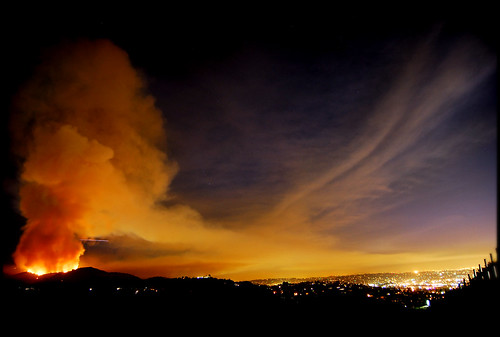
Spare us all word of the weapons, their force and range,
The long numbers that rocket the mind;
Our slow, unreckoning hearts will be left behind,
Unable to fear what is too strange.
Nor shall you scare us with talk of the death of the race.
How should we dream of this place without us?–
The sun mere fire, the leaves untroubled about us,
A stone look on the stone's face?
Speak of the world's own change. Though we cannot conceive
Of an undreamt thing, we know to our cost
How the dreamt cloud crumbles, the vines are blackened by frost,
How the view alters. We could believe,
If you told us so, that the white-tailed deer will slip
Into perfect shade, grown perfectly shy,
The lark avoid the reaches of our eye,
The jack-pine lose its knuckled grip
On the cold ledge, and every torrent burn
As Xanthus once, its gliding trout
Stunned in a twinkling. What should we be without
The dolphin's arc, the dove's return,
These things in which we have seen ourselves and spoken?
Ask us, prophet, how we shall call
Our natures forth when that live tongue is all
Dispelled, that glass obscured or broken
In which we have said the rose of our love and the clean
Horse of our courage, in which beheld
The singing locust of the soul unshelled,
And all we mean or wish to mean.
Ask us, ask us whether with the worldless rose
Our hearts shall fail us; come demanding
Whether there shall be lofty or long standing
When the bronze annals of the oak-tree close
– Richard Wilbur
It is also important to remind ourselves that the notion of workers' control is as American as apple pie. In the early days of the industrial revolution in New England, working people took it for granted that "those who work in the mills should own them." They also regarded wage labour as different from slavery only in that it was temporary; Abraham Lincoln held the same view.